from The Wine and Cheese Appreciation Society of Greater London
Friday 27th April 7pm-10/11pm
Property is mean - intellectual or not The free software movement (Richard Stallman, the GNU Project, the Free Software Foundation, etc.) claims that intellectual property is a bit of a contradiction in terms. They argue that information wants to be free and restricting use, distribution or development of digital goods such as software is a violation of its purposes and principles.
As these "goods" can be copied almost infinitely often one might ask: why constrain access to these goods that are already virtually a common good? But then, one also has to ask: what is it about material wealth that makes it right, without alternative even, to treat it as private property? Most proponents of open-source software and proponents of intellectual property rights reforms distinguish between "intellectual property law" and your run-of-the-mill property law; they oppose the former but appreciate the latter. On the contrary, we want to ask how well founded is the proclaimed distinction between "intellectual" and material property?
When free software was first devised against the emerging software industry it was thought of as a "legal hack": by claiming one's ownership of software one could ensure it stayed freely available and could not be appropriated. Nowadays Lawrence Lessig and the Creative Commons movement encourage everyone to act in the same spirit: musicians, authors, snapshot photographers and bloggers are all encouraged to claim copyright on their work and to specify exactly what someone is (not) allowed to do with their work. Somewhere a "legal hack" became the means to establish a more rigid copyright regime. We want to discuss whether this development is inherent in attempts to hack the law.
Finally, we want to discuss how people make money with open-source software. The curiosity of it is, that it seems to combine the idea of giving away stuff for free with successful business models. How does this work?
On Wednesday 15th February 2012 Limazulu Project Space is holding a special one night event, hosted by: Ed Lehan, Michael Levitt and Ben Thomson
15/02/12
Doors 7pm sharp
@limazululondon
#LZ15FEB

THE SEA IS A BRAIN || ADRENAL COLLAR
New work and research by Rumi Josephs and Matt Drage
For the past eight months, Josephs and Drage have been having conversations with each other about submission, resistance and transcendence. They have located a battleground deep in the gut and in the hidden recesses of the central nervous system—in the bodily roots of hunger and desire. They believe that the manner in which the battle is fought will determine our ability to withstand the forces of social control. Tactics include: medication, perversion, ritual and augmentation.
For their exhibition at Lima Zulu, they will set up a temporary research centre. For ten days they will be living and working in the gallery space, making sculptures, writing and conducting interviews.
PROGRAMME
THURSDAY JANUARY 19TH, 6PM-9PM - PRELIMINARY RESEARCH PRESENTATION
7PM-8PM: Presentations from Josephs and Drage
8PM-9PM: Open discussion
TUESDAY JANUARY 24TH, 7PM-9:30PM - GUEST SPEAKERS
7:30PM: IAIN BALL, “Philips 2013 - The Guts”: fractals, Black Swans, speculative realism, Mayannnectivity and the Age of Uncertainty
8:30PM -- BORIS JARDINE, “An ape with angel glands”: a practical guide to techniques of embaling, cryonic preservation, simian gland procurement and votive offering
SUNDAY JANUARY 29TH - FINAL RESEARCH PRESENTATION
6PM - 7PM - Presentations from Josephs and Drage
7PM - 8:30PM - Open discussion

Tuesday 16th August 2011 7:00pm
Bitcoin is a virtual currency whose claim to fame is that some US politicians became aware of its use to buy drugs on the Internet. However, the Bitcoin project is much more ambitious than merely providing a somewhat anonymous way to buy stuff on the internet. Bitcoins are meant as a new currency: a new money for the Internet age. In fact, this new money is based on different principles than all modern currencies, i.e. credit money.
Because of this ambition, the project provides splendid opportunity to ask what money *is*. That is, we claim that Bitcoin reflects on various qualities of money which are usually taken for granted by addressing them as "technical challenges". In particular, the Bitcoin design is an attempt to solve the "technical" problem of how to exclude people from social wealth and how to maintain a permanent conflict of interest. Hence, we want to present how Bitcoins work and discuss what these technical innovations imply about the social conditions known as the "free market".
Furthermore, the Bitcoin protocol is an expression of scepticism against credit and credit money. For example, the total amount of currency that can ever be created is fixed to the arbitrary magnitude of 21 million. Hence, a lot of discussions about Bitcoin focus on the imminent "deflationary spiral". On the contrary, if there is time left, we want to discuss the question why all modern currencies are credit money. That is, why does capitalism lead to the development of a credit system and in the last instance credit money. Instead of discussing the advantages/disadvantages of a new gold standard we want to discuss why there is no gold standard any more.
No prior knowledge of computer science, finance or Bitcoins is necessary to participate.
Format for the evening: London's Wine and Cheese Appreciation Society present an hour long breakdown of the workings of the bitcoin phenomena, with a structured analysis of its relationship to the gold standard and modern currencies. This will be followed by a facilitated discussion on the implications and possible applications of virtual currency exchange. We're not setting a time limit to the length of discussion - if necessary we'll run till the early hours.

Summer Season 2011
:)
12 May 2011
lives and works
Harry Meadley
ft. Simeon Barclay, hardeep Panhal and Ingram Roeder
26th May 2011
RELATIVELY NORMA (ANNA LIVIA, 1984)
Nina Wakeford
9th June 2011
OCTODOG
Oliver Rafferty and William Robinson
7th July 2011
The New Deal
Holly White - Curated by Ben Vickers
21st July 2011
Michaeloswell: Graphicdesigner. Works 2001—2011: Ten Years Graphicdesign; Retrospective Designexhibition – A graphic odyssey in two languages
Michael Oswell
4th August
2011
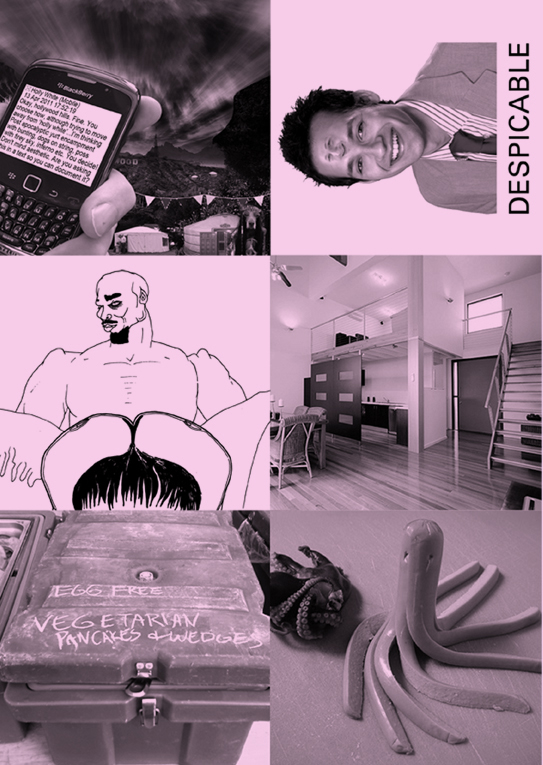
Live Screening of Adam Curtis' New Documentary -
All Watched Over by Machines of Loving Grace
films exploring how computers have radically changed our society.
Monday, May 23rd, 30th and June 6th· 8:30pm - 11:00pm
Ginger Beer Reception @ 8.30pm
IRL Chat Room Post Screening

25th June – 3rd July 2011
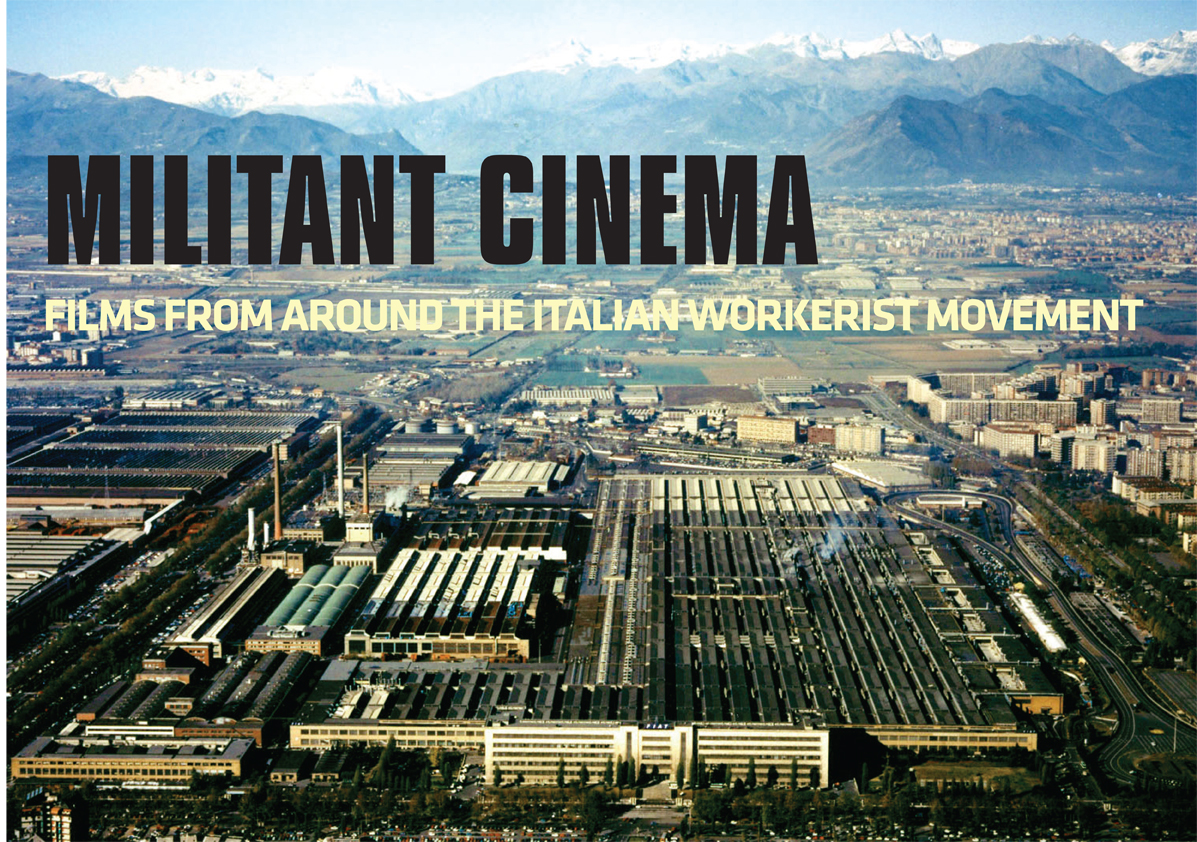
Limazulu presents “Militant Cinema”, a short season of films exploring the themes and circumstances surrounding Workerism (Operaismo), a Marxist tendency within the Italian workers movement from the 1960s. Through allegory and pastiche the films expand and illustrate the ideas contained within the movement. First, that it is the working class who are the active agent within capitalism rather than capital, which is always reactive to the movements of the working class, subjugating and oppressing their innovations. Second, that Marx should be radically re-read beginning with works such as the Grundrisse to reunderstand Marxism as a thorough going materialism. Third, that the answer is for workers within a constantly shifting class structure to unite around the abolition of the system of wage labour, rather than agitate for more equity in its mediation. Rather than pass through a period of ‘dictatorship of the proletariat’, communism could be established more immediately, through struggling for autonomy of the working class from capitalism, a capitalism whose continuation is contingent on their labour. Opposed to more traditional Leninist parties such as the PCI (Partito Comunista Italiano), workerist tactics of occupation, sabotage and the valorisation of the working class spilled into concern for the place of women’s work in the home, for ‘the social factory’ and the cooperative and hence proto-communist nature of working class life.
This eclectic group of films help trace the ideas of the movement and portray something of the social context in which it was born, promising a broad and colourful introduction to late 20th Century Italy - a site of mass insurrection, violent struggle and state repression, with a legacy that has left the Italian political landscape with permanent and bloody scars.
Your Space Is Our Business
Lloyd Corporation
Thursday 18th November 2010
The Daisies (1966) / Twilight (2008)
A film evening with a talk by Hana J
Thursday 25th November 2010
Let’s Go Outside
Curated by Iain Ball, Emily Jones and Ben Vickers
Thursday 9th December 2010
Anal Panopticon
Huw Lemmey
Thursday 16th December 2010
Your Affectionate Friend
David Buckley
Thursday 13th January 2011
Urban Film 1: Los Angeles Plays Itself
Thursday 20th January 2011
Freedom To! Power To!
Katie Schwab
Thursday 27th January 2011
Kill Joy (Act 1)
Lily Keal
Thursday 17th February 2011
The Pot Show
Thursday 10th March 2011
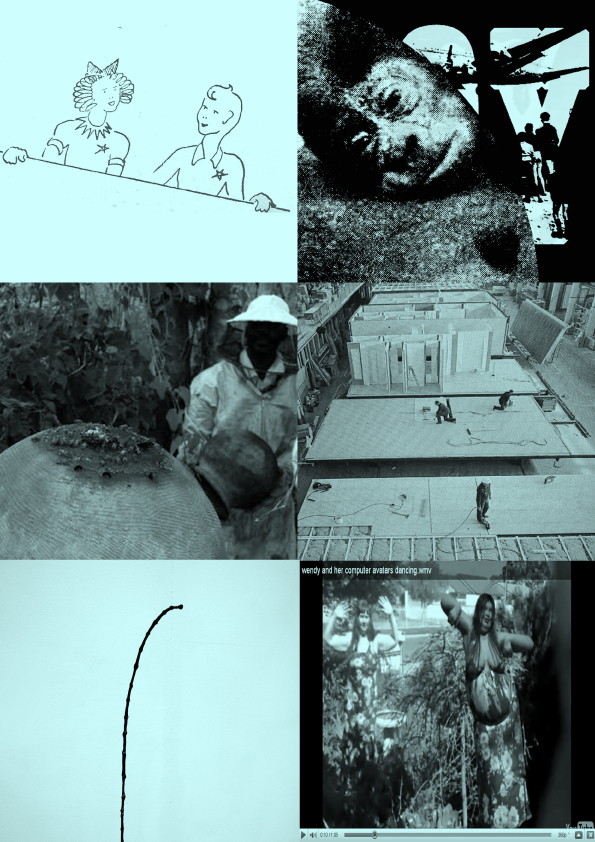
a night of films featuring the American novelist, playwright and poet James Baldwin, including a talk by London based writer Michael Harding
Wednesday 10th November 2010
Paintings by Anna Rosen and Georgina Nettell
Music by Old Forest
Tuesday 12th october 2010
STAMFORD HILL DIARIES/ MEMORIES OF BIRMINGHAM
James Whittingham
Friday 11th June 2010
EVERTHING MUST GO
Morag Keil and Manuela Gernedel
Wednesday 23th June 2010
DAMOCLES
Lawrence Westlake
Wednesday July 7th 2010
SEX/COMMUNE
A short season of films on sex in radical politics
Organised by Huw Lemmey
Monday 12th to Sunday 25th July 2010
HELEN
Richard Whitby and Jamie George
Wednesday 4th August 2010
NO LONG TERM
Seth Pick
Thursday 19th August 2010
An evening of films and performance at Limazulu
Lucy Parker and Siân Robinson Davies
Wednesday 8th September 2010

Limazulu interview, Artlicks
L'USINE ABANDONNEE
Rosanna McLaughlin & Katie Schwab
4th February 2010
RHSP
Richard Hards & Seth Pick
18th February 2010
ON COMMUNES
Julia Gouin
28th February 2010
There Is Only The Taking Up Of Tools
Mary Hurrell, Beatrice Loft Schulz, Hania Stella-Sawicka, Ursula Wild and Rosanna Mclaughlin
18th March 2010
THE POST-CRITICAL PANTHER PARTY
Roman Liska
01st April 2010
PLACE ON TOP
Oliver Robinson
15th April 2010

HYDROGEN DOORWAYS
Dan Blurton
22nd october 2009
KODACHROME
Sam Thomson, James Stodart, Claire Baily, Neil Kilpatrick and Ellie Wright
6th Novermer 2009
BROTHER PARTISANS
Huw Lemmey
19th November 2009
OSCULATE
Lola Wilson with Michael Harding and Steven Pank
3rd December 2009
NU WRKZ
Richard Parry
10th December 2009
THREE POINT
Michael Levitt
7th January 2010

TIMES NEW ROMAN
Jonathan Mainley
ENCARTA
Alex Head, Matthew Robinson, Katie Schwab
GRACELAND
Michael Levitt, Seth Pick, Lola Wilson, Katie Schwab and Huw Lemmey